


This article provides you with:
A clear understanding of how art, data science, environmental studies, and engineering are converging within contemporary art education and practice
Insight into why art institutions are shifting from medium-based teaching toward systems-based creative thinking
An overview of how data is becoming a creative material rather than just an analytical or informational tool
A look at emerging hybrid creative roles, including creative technologists, data-driven visual artists, and climate-focused installation artists
Practical implications for art educators and arts managers as they redesign curricula, programs, and institutional structures to support interdisciplinary practice
Special Announcement:

ArtForms x Art Institutes
We are pleased to announce an official collaboration with ArtForms.net, the premier form-builder designed specifically for the creative industry. Whether you are managing gallery inquiries, workshop registrations, or student applications, ArtForms provides the professional tools you need for your workflow.
Claim Your Special Lifetime Offer!!!
To celebrate this partnership, we are offering a Special Lifetime Offer—but act fast, as this is limited to the first 250 next 79 accounts created.
How to claim your offer:
Step 1: You must first create a free account at ArtForms.net.
Step 2: Once your account is active, visit artforms.net/special-offer to claim your lifetime deal.
(Note: You must be logged into your new ArtForms account for the claim page to function.)
A Quiet Transformation?
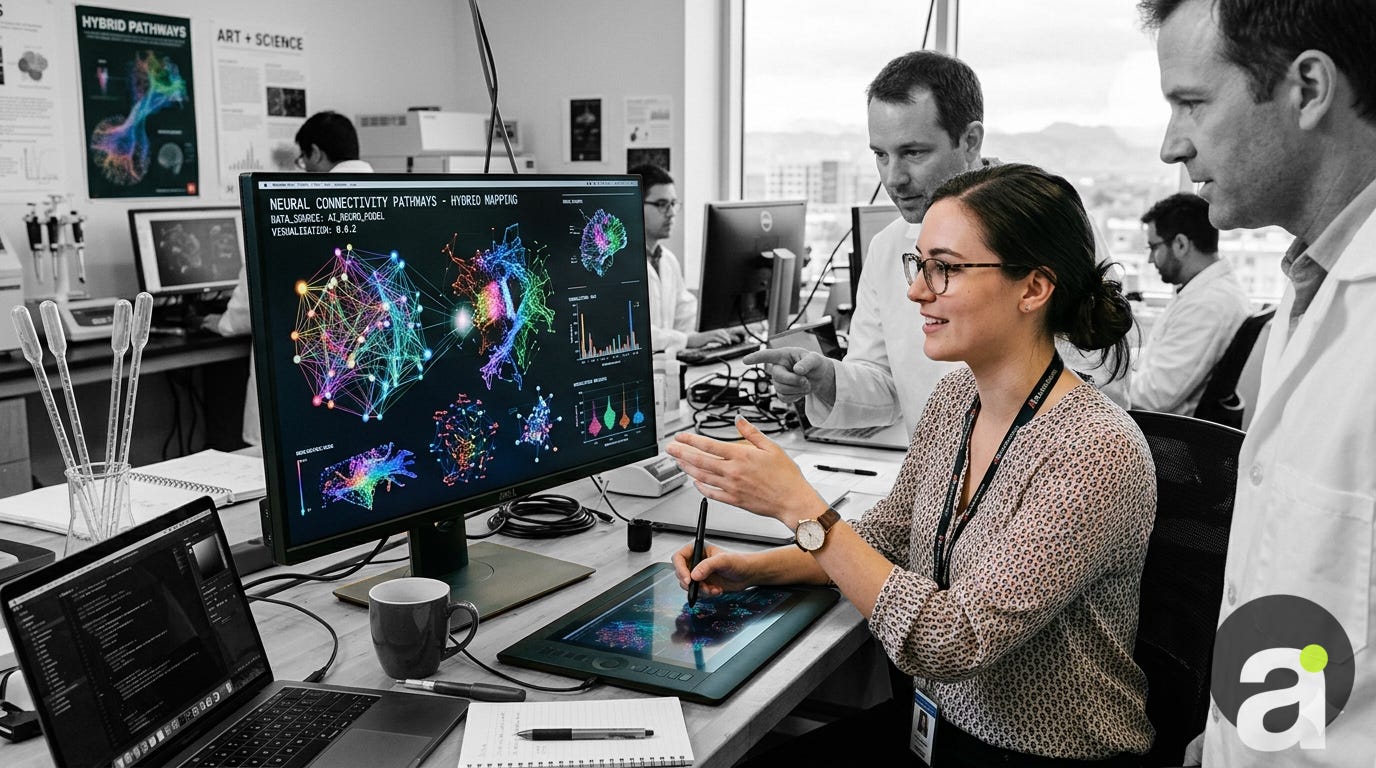
Across art schools and cultural institutions, a quiet transformation is underway. Art is increasingly shaped by data science, environmental thinking, and engineering giving rise to new hybrid creative roles and reshaping how education and practice are defined.
A Shift Beneath the Surface
Something is changing inside art education, but it is not the kind of change that announces itself loudly.
It is not a new medium or a passing trend. It is a deeper structural shift in how creativity is being defined, taught, and practiced.
For a long time, art education could be understood through relatively stable categories: painting, sculpture, design, photography, and theory. Even when digital tools entered the studio, they were often treated as extensions of existing practice rather than something that fundamentally altered its logic.
That separation is now dissolving.
Across institutions, art is increasingly shaped by fields that once sat outside of it, such as data science, environmental studies, engineering, and interactive media. And as these disciplines enter the creative space, they are not simply adding new tools. They are changing the questions being asked.
Instead of focusing only on materials or mediums, many programs are beginning to ask a different kind of question:
What systems is this work part of and how does it behave within them?
This shift is subtle, but it changes everything that follows.
Data as a Creative Material
One of the clearest signs of this transformation is the changing role of data.
Data was once something that lived outside the studio—used for research, analysis, or documentation. It was informational rather than expressive. But in contemporary practice, that boundary is becoming increasingly difficult to maintain.
In many art schools and creative programs today, data is no longer treated as background information. It is becoming something closer to a raw material, something that can be shaped, distorted, interpreted, and made experiential.
Climate datasets are being translated into immersive installations. Social data is being transformed into narrative environments. Abstract systems of information are being rendered as sound, movement, and spatial experience.
This has quietly introduced a new kind of creative identity into the field: the Data-driven Visual Artist.
What distinguishes this role is not technical skill alone, but a shift in intent. The goal is no longer simply to represent data accurately, but to use it as a starting point for interpretation—almost like a language that can be spoken in different emotional registers.
For educators, this creates a challenge that is still being fully understood. If data can be a material, then traditional ideas of composition, form, and critique need to expand to include systems thinking, information literacy, and interpretive design.
Environmental Thinking Enters the Studio
A similar shift is happening through environmental studies, but in a different register.
Rather than entering art education as a topic or theme, environmental thinking is increasingly shaping the framework of creative work itself.
Projects are no longer only about representing ecological issues. They are beginning to engage directly with environmental systems, like materials, energy flows, climate patterns, and ecological feedback loops.
This has led to work that feels less like traditional object-making and more like constructing experiences that unfold over time and respond to real-world conditions.
Within this space, a new hybrid practice is becoming more visible: the Climate-focused Installation Artist.
These practitioners often work at the intersection of science communication and artistic expression. Their work does not simply illustrate environmental issues, it attempts to translate them into sensory and emotional experience, making abstract systems feel immediate and physically present.
For arts managers and program leaders, this is also reshaping institutional priorities. Questions of sustainability, public engagement, and environmental relevance are no longer peripheral considerations. They are becoming central to how programs are designed and funded.
Engineering and the Expansion of Creative Practice
If data and environmental thinking are reshaping what art is about, engineering and interactive media are reshaping what art is made of.
Increasingly, creative work is no longer confined to static materials or traditional studio processes. It is built through systems, for example, responsive environments, generative code, sensors, networks, and interactive technologies.
In this context, engineering is not external to art practice. It has become part of its infrastructure.
Installations respond to audience movement. Algorithms generate evolving visual systems. Physical computing connects bodies, spaces, and digital environments in real time.
As this continues to develop, another hybrid role has emerged: the Creative Technologist.
This is not simply a technical position, nor purely an artistic one. It sits in between requiring fluency in systems design, coding logic, interaction design, and visual thinking. The work is less about producing isolated outcomes and more about designing conditions in which experiences can emerge.
For institutions, this creates a structural question that is still unresolved:
How do you support creative work that does not belong to a single discipline, department, or methodology?
A New Set of Creative Identities
As these disciplines converge, what is emerging is not just interdisciplinary collaboration, but new creative identities that do not fit neatly into existing categories.
Across institutions, three roles are becoming increasingly recognizable:
The creative technologist, working at the intersection of systems, code, and experience design.
The data-driven visual artist, transforming information systems into visual and spatial expression.
And the climate-focused installation artist, translating ecological systems into immersive, experiential environments.
What is important here is not just that these roles exist, but that they signal a broader shift. They suggest that creative work is no longer defined primarily by medium or discipline, but by the systems it engages with.
What This Means for Art Educators and Institutions
For educators, this shift requires more than curriculum updates. It requires a rethinking of how knowledge itself is structured.
Studio practice is no longer only about making objects or developing technique. It is increasingly about learning how to work across systems including conceptual, technological, environmental, and social.
This means moving beyond medium-based teaching toward approaches that emphasize systems thinking, collaboration across disciplines, and the ability to translate between different forms of knowledge.
Critique, too, is evolving. It is no longer only about formal or conceptual evaluation, but about understanding how a work behaves within larger systems such as technical, environmental, and cultural.
For institutions, the implications are equally significant. Supporting interdisciplinary practice often requires new forms of infrastructure, new kinds of staffing, and new models of collaboration across departments that were never designed to work together.
Interdisciplinary Convergence
Interdisciplinary convergence is often described as a trend, but in practice it feels more like a reorganization of creative reality itself.
As art, science, and technology continue to merge, the boundaries that once defined creative practice are becoming less important than the systems those practices engage with.
And so, the question is no longer simply what art is.
It becomes something closer to:
What happens when creativity is no longer contained within disciplines, but operates across them as a single connected system?
Let Us Know
We’d love to hear how this is showing up in your own institution or practice.
How is interdisciplinary work changing the way you teach, manage, or create?
Sponsored by ArtForms

Discover the World’s Top Art Institutes at https://artinstitutes.org
Hope I'm not the only one appreciating this.